
Published : 2026-11-20
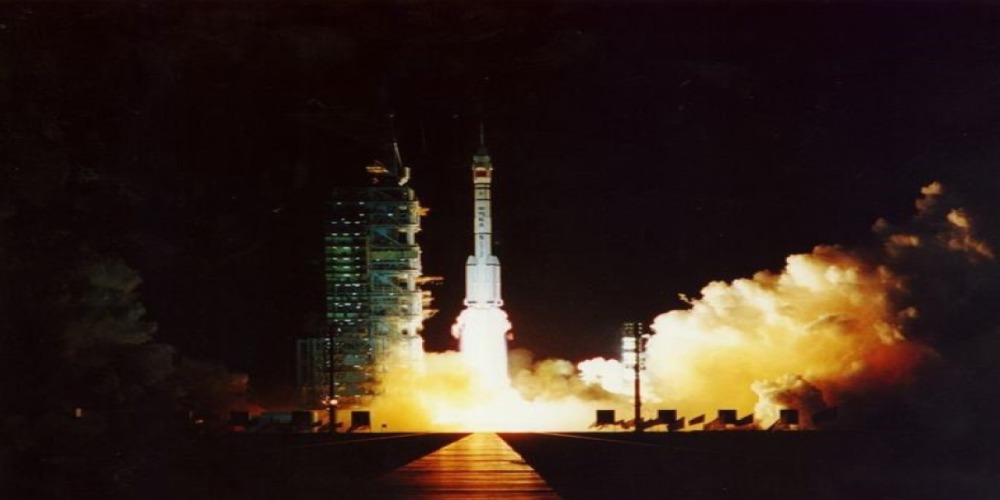
On 20 November, 1999, at 6:30 a.m., Shenzhou-1 (神舟一號), the first experimental spacecraft independently developed by China, was launched from the Jiuquan Satellite Launch Center.
Shenzhou-1 consisted of an orbital module, a return module and a propulsion module. About 10 minutes after launch, Shenzhou-1 successfully separated from the launch vehicle and accurately entered its predetermined orbit.
After entering orbit, ground-based measurement and control centres and tracking ships deployed in the Pacific and Indian Oceans jointly tracked and controlled Shenzhou-1, and also tested the spacecraft's life support system, attitude control system and other systems.
After completing the scheduled space science experiments, Shenzhou-1 successfully returned and landed in the central region of Inner Mongolia.
Shenzhou-1 was the first flight experiment of China's manned space engineering programme. It marked a major breakthrough in China's manned spaceflight technology, making China the third country, after the former Soviet Union and the United States, to master the "space-to-ground round-trip" technology for spacecraft.
It is an important milestone in the history of China's space industry.